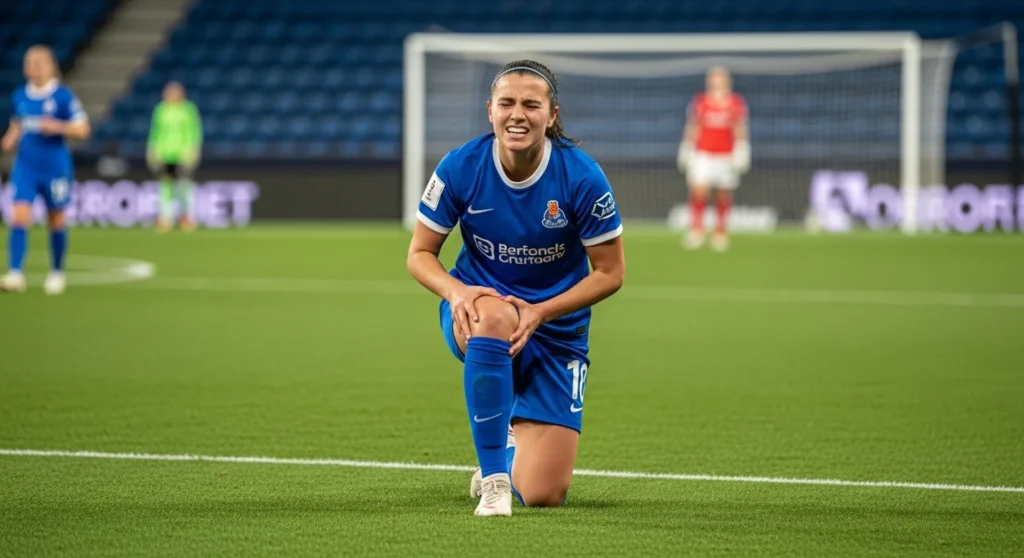
ACL tears are one of the most frustrating injuries in sports — surgery, months of rehab, missed seasons, and a long road back to confidence. What’s making this topic trend in 2026 is the growing spotlight on how often ACL injuries affect teenage girls and women in sports like soccer and basketball, and how many of these injuries happen without contact. The tough part? Most teams still don’t use proven prevention routines consistently.
This guide breaks down ACL injury prevention for female athletes in a practical way: why the risk is higher, what actually causes many non-contact ACL tears, and a simple 10-minute warm-up you can plug into practices immediately.
Medical note: This article is for education only and is not personal medical advice. If you have knee pain, swelling, instability, or a recent injury, get evaluated by a qualified clinician.
Why ACL injury prevention for female athletes is trending right now

Recent reporting has highlighted how teenage girls can face a dramatically higher risk of ACL tears than boys in comparable sports, and experts keep pointing to the same solution: neuromuscular warm-ups that teach safer landing, cutting, and deceleration mechanics — programs that exist, but aren’t widely adopted at the youth level.
At the same time, sports medicine sources continue emphasizing sex-specific factors that can impact injury risk and return-to-play outcomes, which is pushing more coaches, parents, and athletes to search for prevention plans that actually fit female athletes.
What the ACL does (and why it tears during “normal” moves)
Your ACL (anterior cruciate ligament) stabilizes the knee, especially during:
- quick direction changes (cutting)
- hard stops (deceleration)
- landing from a jump
- pivoting on a planted foot
Many ACL tears are non-contact. That means nobody hits you — your knee collapses into a risky position during a fast, routine movement. The common pattern is the knee drifting inward (knee valgus), often paired with a stiff landing and poor hip control. The goal of prevention is not “being careful.” It’s training your body to move differently under speed and fatigue.
Why female athletes often face higher ACL risk
There isn’t one single reason. It’s usually a stack of factors, including:
- Neuromuscular control differences: hips and core control matter when the knee is under load.
- Landing and cutting mechanics: knee-in posture and stiff landings increase risk.
- Strength balance: athletes may have relatively less posterior-chain strength (glutes/hamstrings) compared to quad dominance.
- Fatigue + workload: mechanics break down late in practices/games or during heavy training blocks.
Good news: you can train these. The strongest prevention plans are not complicated — they’re consistent.
The 10-minute ACL prevention warm-up (plug-and-play)
Do this 3+ times per week before practice or training. If you only do it once, it becomes “extra.” If you do it most sessions, it becomes your team’s baseline.
Part 1: Raise temperature (2 minutes)
- Jog forward + backward (30 seconds each)
- Side shuffle both directions (30 seconds)
- High knees + butt kicks (30 seconds)
Part 2: Dynamic mobility + activation (3 minutes)
- Leg swings (front/back, then side/side) – 10 each leg
- Walking lunges (controlled knee alignment) – 8 reps each leg
- Glute bridge (squeeze at top) – 10 reps
Coaching cue: During lunges, keep the knee tracking over the middle toes. No “knee collapse” inward.
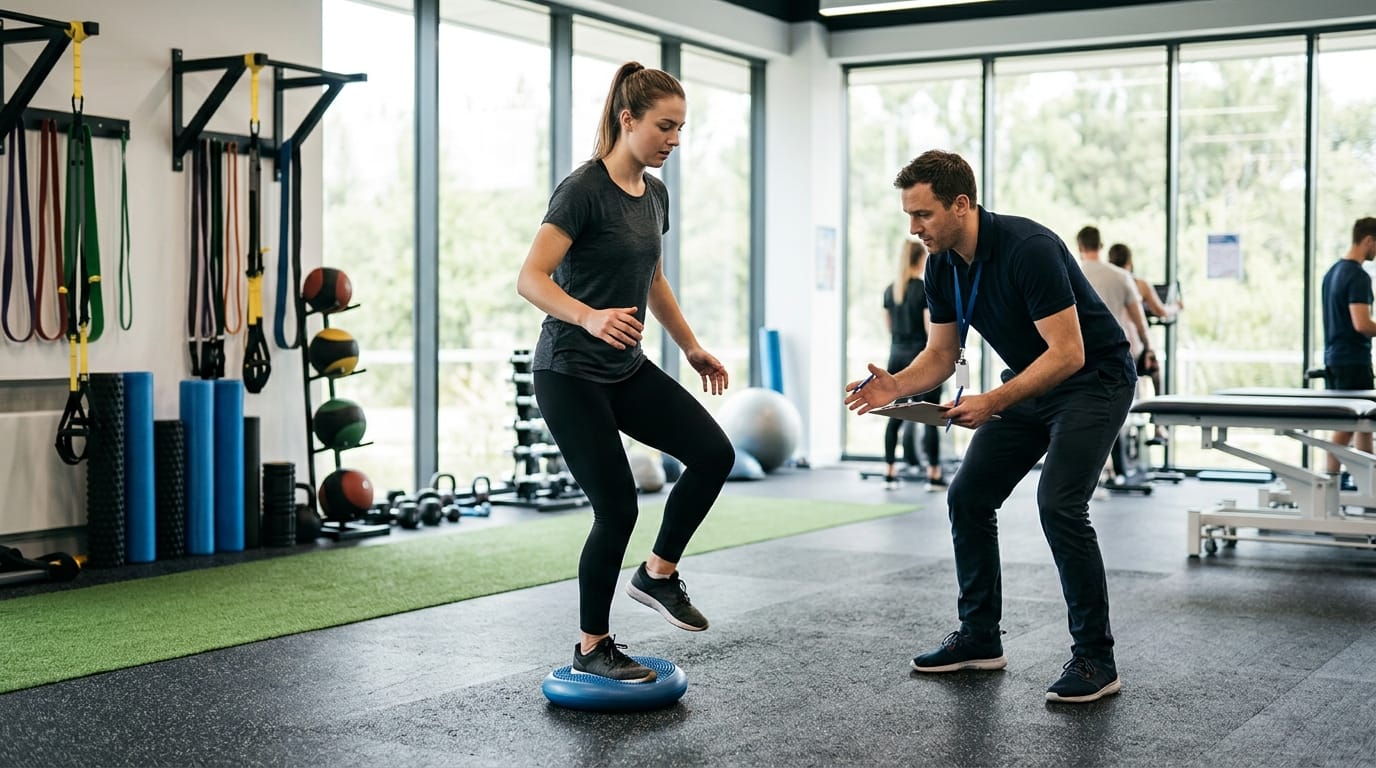
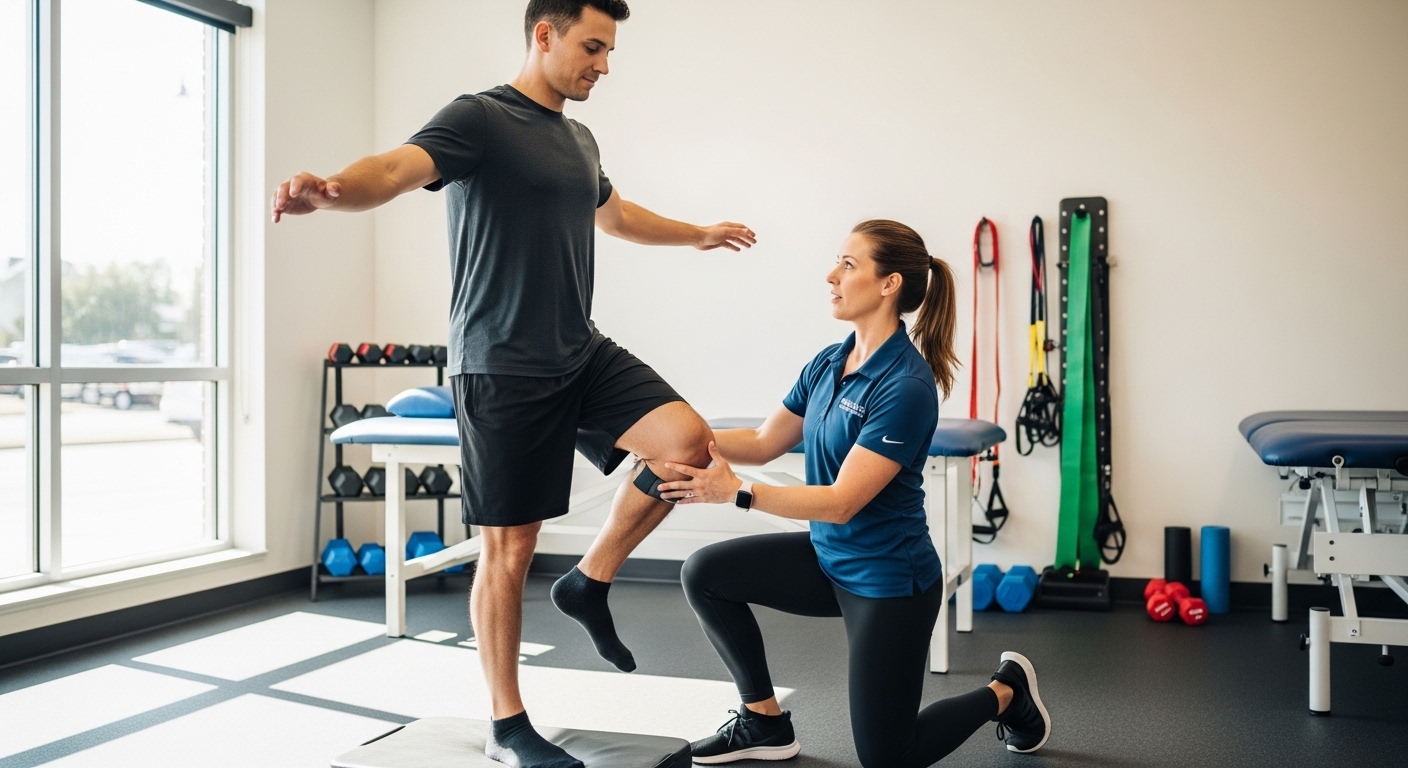
Part 3: Balance + control (2 minutes)
- Single-leg balance – 20 seconds each leg
- Single-leg balance with reach (reach forward/side) – 5 reaches each direction
Coaching cue: Level hips. If the hip drops and the knee dives inward, reset and shorten the range until control improves.
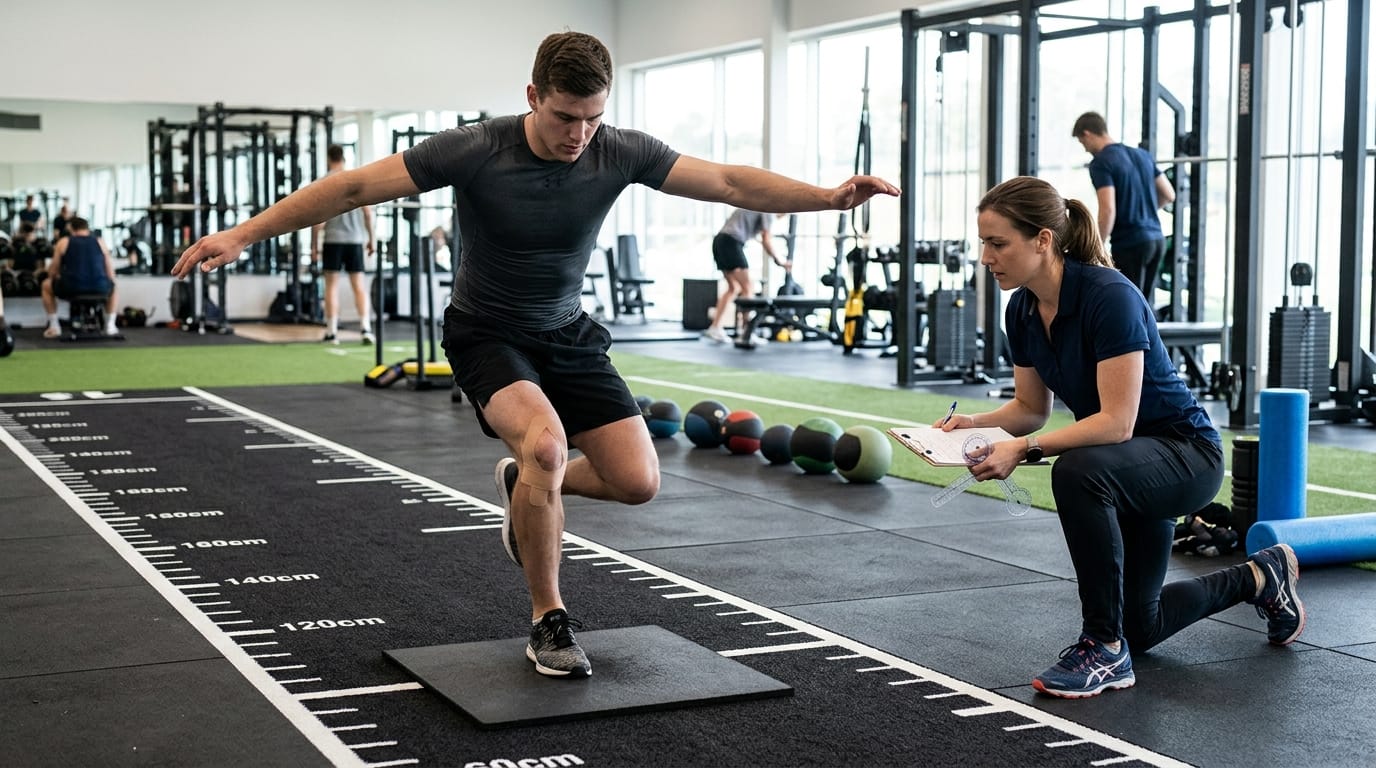
Part 4: Landing + deceleration (3 minutes)
- Snap-downs (quick drop into athletic stance) – 6 reps
- Jump-and-stick (small jump, soft landing, hold 2 seconds) – 6 reps
- Deceleration run (short sprint, controlled stop) – 4 reps
Coaching cues: land quietly, knees slightly bent, hips back, chest up. The knee should not cave inward. “Soft, quiet, controlled” beats “big, loud, sloppy.”
Strength work that supports ACL protection (2–3x/week)
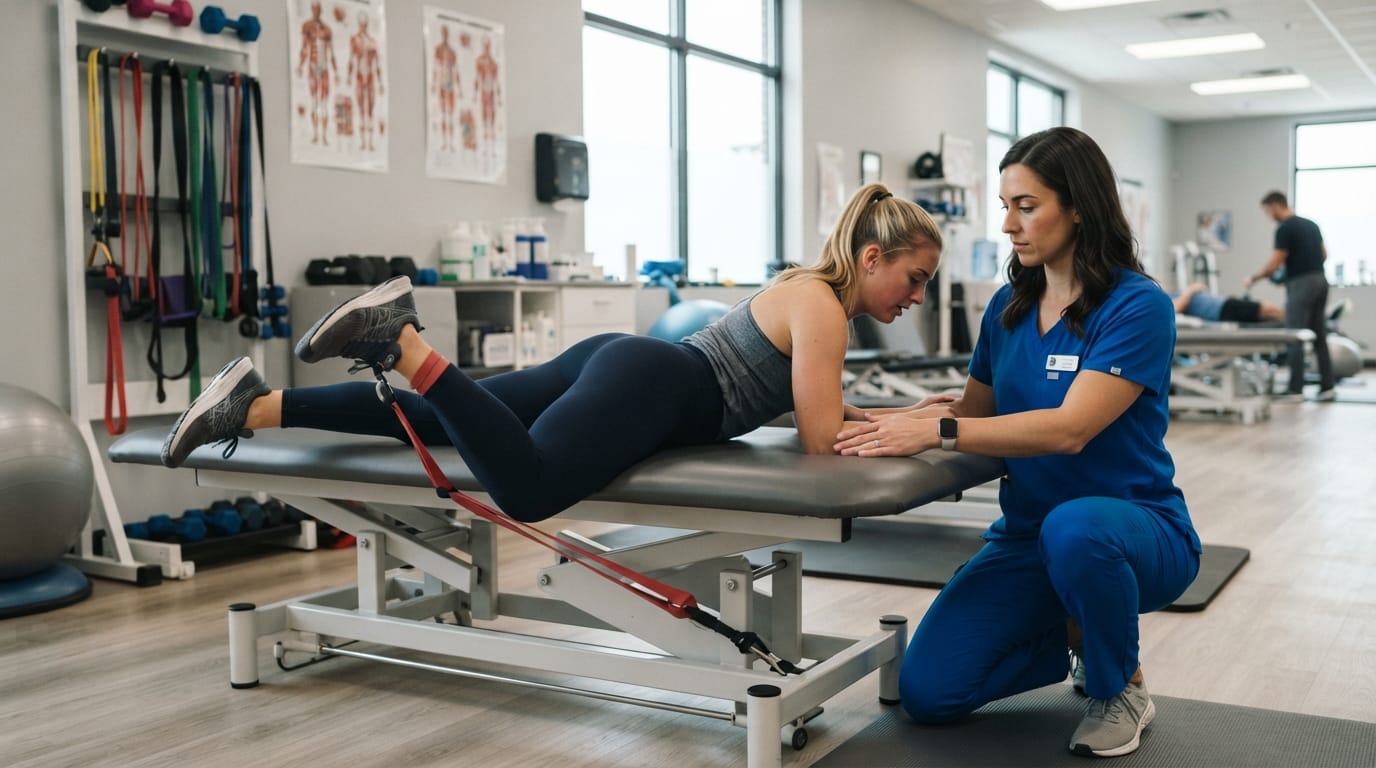
The warm-up teaches mechanics; strength helps you keep those mechanics when you’re tired. You don’t need a full gym — but you do need a plan.
Top 5 moves
- Romanian deadlift (RDL) or hip hinge (bodyweight to start)
- Side plank (progress to leg lift)
- Step-downs (slow, controlled knee tracking)
- Hamstring curls (band or machine if available)
- Calf raises (supports ankle stiffness and control in cutting)
Simple dose: 2–3 sets of 6–10 reps each, focusing on perfect form. If form fails, stop the set. Sloppy reps train sloppy movement.
Workload mistakes that quietly increase ACL risk
Even a perfect warm-up can’t fully protect you from “too much, too soon.” Common risk multipliers:
- Sudden spikes in training volume (extra tournaments, extra practices)
- Playing year-round with no off-season strength block
- Returning too fast after knee pain or instability
- Fatigue overload (poor sleep + high training = poor mechanics)
If you’re using wearables, use them for what they’re good at: spotting fatigue patterns and recovery gaps — not pushing harder every day just because you can measure it.
When to see a doctor (don’t “walk it off”)
Get evaluated if you have any of these:
- a “pop” sensation with swelling within hours
- knee instability or buckling
- locking/catching
- pain that keeps returning when you cut/jump
- swelling that doesn’t settle
If you want a clear checklist of red flags, use this internal guide: When to See a Doctor for Sports Injuries: Warning Signs to Watch For.
How to make this stick (coach and parent rollout plan)
The reason prevention programs fail is not science. It’s consistency. Here’s how to build it into real life:
- Make it non-negotiable: warm-up starts the session, every session.
- Coach the cues: “knees over toes,” “soft landing,” “hips back.”
- Track compliance: a simple checklist beats a perfect plan nobody follows.
- Add progressions monthly: slightly harder balance and landing drills as control improves.
And if your athlete is returning from any injury, a gradual rebuild matters. These two internal resources support safe progression:
- Sports Injury Recovery: Expert Tips for a Faster Healing Process
- The Best Exercises for Safe Recovery After a Sports Injury
Bottom line
ACL injury prevention for female athletes is trending because the injury burden is real — and the solution is actionable. You don’t need a fancy facility. You need a short, consistent warm-up that teaches better mechanics, plus basic strength work that supports those mechanics under fatigue.
Start with the 10-minute routine above, do it most sessions, and treat it like brushing your teeth: small habit, big payoff.
If you want a related read on staying balanced with training data and recovery: How Wearable Tech Can Prevent — or Trigger — Sports Injuries.