
Ankle sprain prevention in 2026 is receiving renewed attention after research highlighted the benefits of neuromuscular training for athletes. Ankle injuries are common in sports that involve jumping, running, pivoting, and sudden changes of direction. Although many sprains heal without surgery, returning to activity before strength and stability recover can increase the risk of another injury.
A systematic review published in July 2026 examined 13 randomized controlled trials involving 1,476 participants. Researchers found that neuromuscular training was associated with a 55% reduction in ankle injury incidence compared with control conditions. The findings support structured balance and movement training as useful prevention strategies, although individual results vary.
For athletes, this research reinforces an important lesson: ankle injury prevention requires more than stretching before a game. Strong muscles, coordinated movement, balance, and appropriate recovery all contribute to protecting the joint.
This guide explains why ankle sprains happen, how balance training works, and what athletes should consider before returning to running, basketball, volleyball, pickleball, or other demanding activities.
Why Ankle Sprains Remain a Major Sports Injury Concern in 2026
An ankle sprain occurs when a ligament supporting the ankle stretches beyond its normal capacity or tears. Ligaments connect bones and help maintain joint stability during movement.
The most common ankle sprains involve the lateral ligaments on the outside of the ankle. These injuries frequently occur when the foot rolls inward during landing, stepping, or changing direction.
Sports such as basketball and volleyball expose athletes to unpredictable landing positions. Tennis and pickleball require rapid lateral movements, while soccer involves running, contact, and frequent changes of direction.
Not every ankle injury is a simple sprain. Fractures, tendon injuries, high ankle sprains, and cartilage damage may produce overlapping symptoms. Correct diagnosis is important when pain, swelling, or difficulty bearing weight occurs.
Why previous ankle injuries increase the risk of another sprain
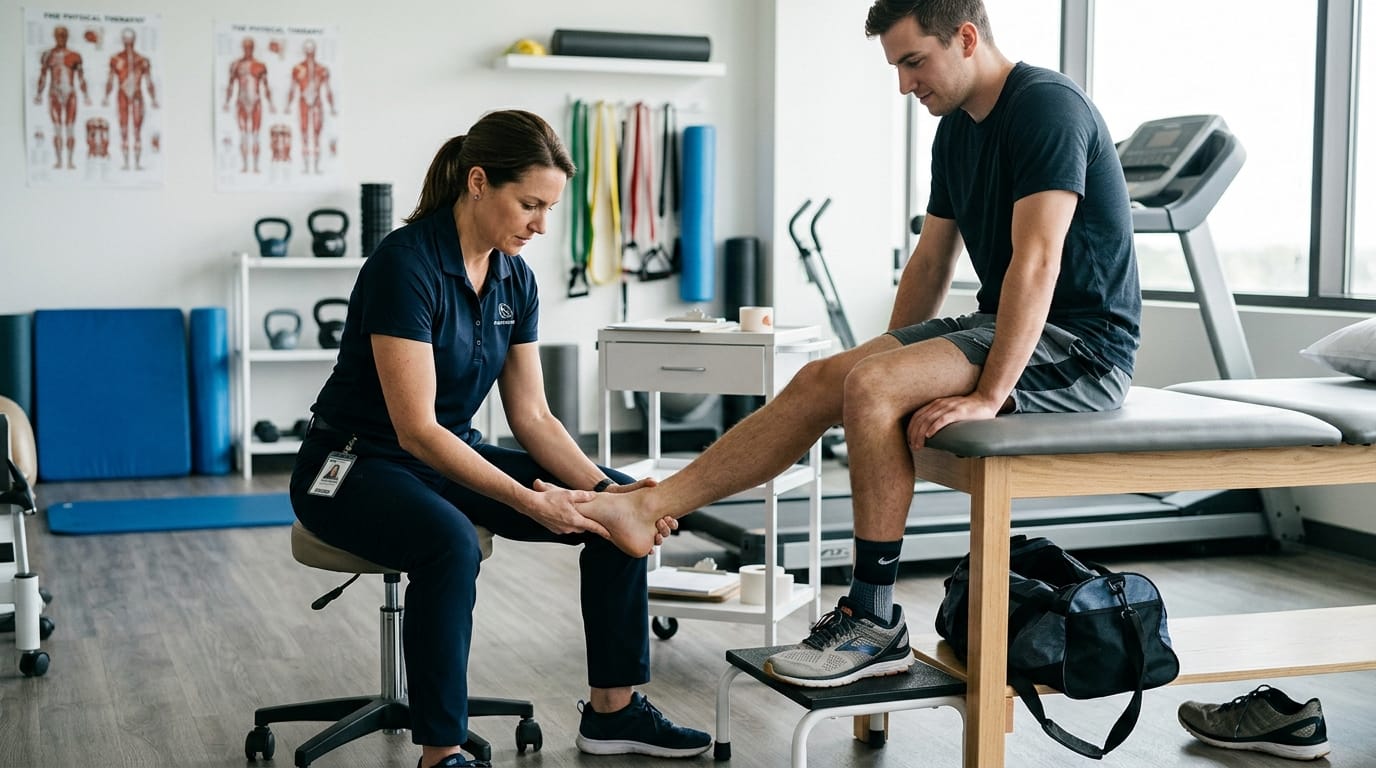
One important concern after an ankle sprain is the possibility of recurrence. Athletes sometimes resume competition when pain has improved but before strength, coordination, and joint confidence have fully recovered.
After an injury, some people experience reduced balance, altered movement patterns, or a sensation that the ankle may suddenly give way.
This can contribute to chronic ankle instability, a condition involving recurring instability or repeated ankle sprains. Not everyone develops it, but persistent symptoms deserve assessment.
Rehabilitation should therefore address more than pain and swelling. Athletes may need progressive strengthening, balance work, sport-specific movement, and functional testing before returning to unrestricted competition.
Why an ankle can feel weak even after swelling disappears
Swelling often improves earlier than full functional recovery. An athlete may walk normally but still struggle with single-leg balance, rapid direction changes, or jumping.
Ligament injuries can affect proprioception, the body’s ability to sense joint position and movement. Muscle weakness and reduced confidence may also influence performance.
These limitations can become more noticeable when an athlete is tired or moves quickly.
Our sports injury recovery guide explains why gradual rehabilitation matters even after the most obvious symptoms have improved.
How jumping and lateral movements challenge ankle stability
Jumping sports place considerable demand on ankle control. When a player lands awkwardly or steps on another person’s foot, the ankle can move beyond its normal range.
In court sports, rapid lateral movement adds another challenge. Athletes must decelerate, stabilize their bodies, and accelerate in a different direction within seconds.
If the athlete lacks sufficient strength or control, these movements may increase injury risk.
Prevention programs often include controlled landing practice, balance exercises, and movement training that prepares athletes for these demands.
What the July 2026 neuromuscular training study found
The July 2026 research published in Frontiers in Physiology evaluated neuromuscular training as a strategy for preventing ankle injuries.
The review included 13 randomized controlled trials with 1,476 participants. Researchers examined injury incidence, balance, ankle function, and measures of neuromuscular control.
Across the included trials, neuromuscular training was associated with a relative risk of 0.45, corresponding to approximately 55% fewer ankle injuries in the training groups than in the comparison groups.
The researchers also reported improvements in certain dynamic balance tests and sports-related ankle function.
However, the studies used different training methods, and the quality of evidence varied. The authors emphasized the need for additional high-quality trials to confirm the findings and determine optimal training programs.
Importantly, the 55% figure describes the pooled research results. It does not guarantee that every individual athlete will reduce their personal injury risk by exactly that amount.
Why balance training may help reduce injury risk
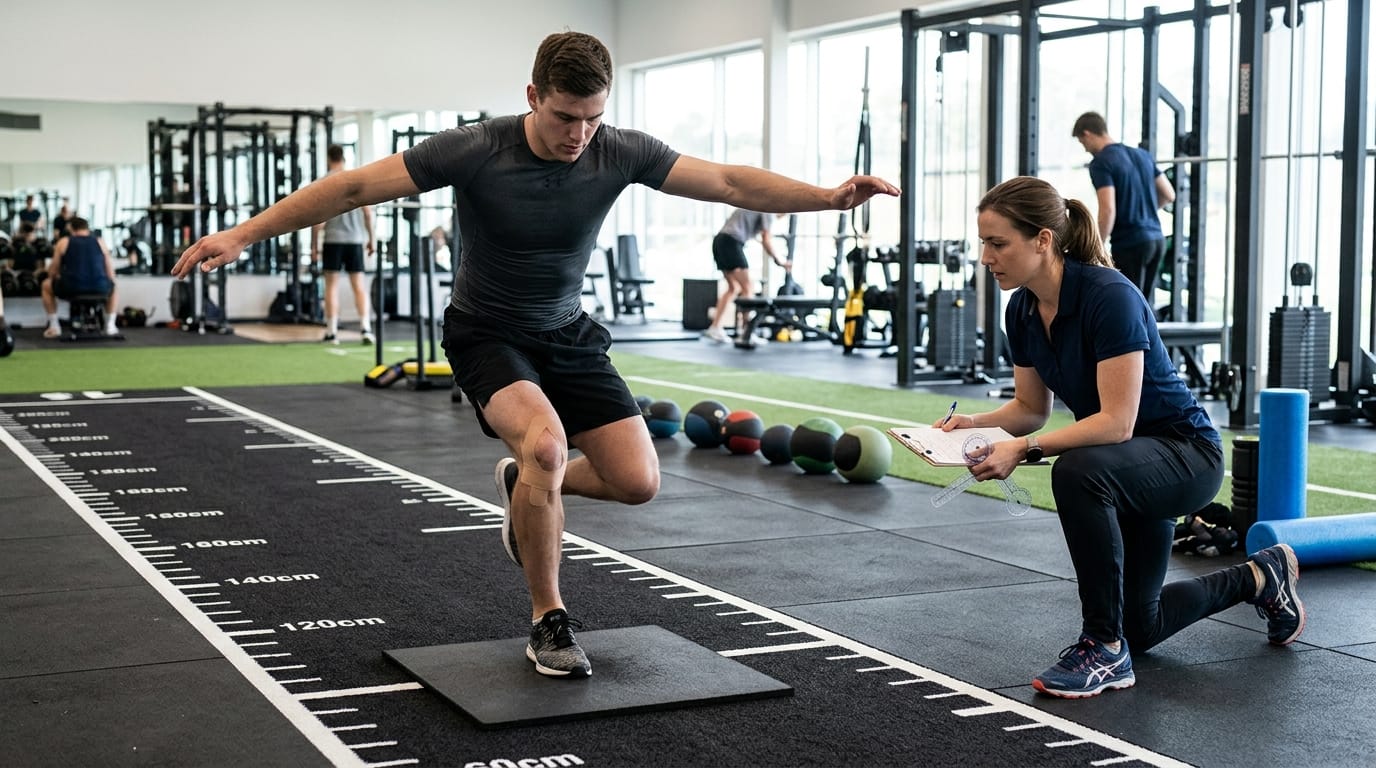
Balance training challenges the body to maintain stability while standing or moving. Exercises may involve single-leg standing, controlled reaching, directional movement, or landing practice.
These activities require coordination between the nervous system and muscles supporting the ankle, knee, hip, and trunk.
With consistent practice, athletes may improve their ability to respond to changes in position and maintain control during demanding movements.
However, balance exercises should be appropriate for an athlete’s age, experience, and current injury status. More difficult exercises are not automatically better.
Readers interested in broader training strategies can explore our guide to wearable technology and injury prevention, which discusses monitoring workload and recovery without relying excessively on fitness data.
How Athletes Can Build a Practical Ankle Sprain Prevention Routine

A useful ankle prevention program should combine strength, balance, controlled movement, and sport-specific preparation.
The ideal program depends on the athlete. Someone with no previous ankle injury may need different training from a player recovering from repeated sprains.
For healthy athletes, basic balance exercises can often be incorporated into warm-ups or strength sessions. Athletes recovering from an injury should follow a rehabilitation plan developed by an appropriate healthcare professional.
The goal is to improve movement quality gradually rather than create fatigue before competition.
Strength, balance, and controlled landing exercises
Single-leg balance is a common starting exercise. The athlete stands on one leg while maintaining a stable position and keeping the knee and foot comfortably aligned.
Once basic balance is comfortable, a coach or physical therapist may introduce reaching movements, controlled changes in position, or appropriate unstable-surface challenges.
Strengthening exercises can target the calf muscles, muscles around the ankle, and the hips. Common examples include controlled calf raises and resistance-band ankle movements.
For athletes who regularly jump, landing mechanics also deserve attention. Practicing controlled landings can help develop coordination between the hips, knees, and ankles.
Training should progress from simple movements to activities that resemble the athlete’s actual sport.
For example, a basketball player may eventually practice landing, cutting, and responding to changing directions. A runner may focus on controlled single-leg loading and gradual increases in running demands.
The appropriate progression depends on symptoms, physical capacity, and the recommendations of qualified professionals.
How to progress exercises without increasing injury risk
Exercise progression should be gradual and based on movement quality. An athlete who struggles to maintain balance on a stable surface may not be ready for advanced jumping drills.
Coaches should prioritize controlled movement over completing a large number of repetitions.
For injured athletes, pain, swelling, instability, and reduced function can indicate that training demands need to be reassessed.
A qualified physical therapist may evaluate range of motion, strength, balance, and functional movements before recommending more demanding activities.
Sudden increases in jumping volume or training intensity should be avoided, particularly when an athlete is returning after several weeks away from sport.
Appropriate footwear can also support performance. Shoes should fit correctly and suit the demands of the activity, although no shoe can eliminate ankle sprain risk.
Some athletes with previous sprains may benefit from ankle braces or taping. Research supports external ankle support in certain sporting populations, particularly when combined with an appropriate rehabilitation or prevention plan.
However, bracing should not automatically replace strengthening and movement training. Athletes should discuss persistent instability with a healthcare professional.
Young athletes deserve additional attention because growing bodies may respond differently to training and injury.
Parents should avoid assuming that a child’s ankle pain is harmless simply because the child can continue playing. Fractures and growth-related injuries may require different management from ordinary ligament sprains.
Our article on sports injuries in children explains why early recognition, appropriate equipment, and sensible training loads matter.
After a recent ankle injury, athletes should seek assessment when they cannot bear weight, experience significant swelling or deformity, have focal bony tenderness, or develop numbness and circulation changes.
Persistent pain, recurring instability, and repeated sprains also warrant professional evaluation.
Return-to-sport decisions should consider strength, balance, movement quality, confidence, and the ability to perform sport-specific tasks without concerning symptoms.
Returning simply because a certain number of days has passed may overlook important limitations.
For the complete research findings, read the July 2026 systematic review of neuromuscular training and ankle injury prevention.
The study supports structured training while acknowledging differences between programs and limitations in the existing evidence.
Consistency is another important consideration. Prevention exercises are unlikely to provide their full potential benefit if athletes practice them only once and then abandon the routine.
Coaches can help by incorporating appropriate balance and landing exercises into regular training rather than treating injury prevention as an occasional activity.
Teams should also allow adequate recovery between demanding sessions. Fatigue may affect movement quality, particularly during repeated jumps and rapid changes of direction.
For athletes balancing multiple sports, training loads should reflect total activity rather than the demands of only one team.
Ankle sprain prevention in 2026 is becoming more evidence-informed, with research highlighting the potential value of neuromuscular training.
However, injury prevention is never guaranteed. Court conditions, collisions, fatigue, individual anatomy, and unexpected movements can still contribute to ankle injuries.
The strongest approach combines sensible preparation, progressive strength and balance training, appropriate recovery, and early attention to symptoms.
For athletes returning from a sprain, restoring confidence and function is just as important as waiting for discomfort to disappear.
Medical disclaimer: This article provides general sports injury education and does not replace individualized diagnosis, medical treatment, or physical therapy. Athletes with acute pain, significant swelling, instability, or repeated injuries should seek qualified healthcare guidance.