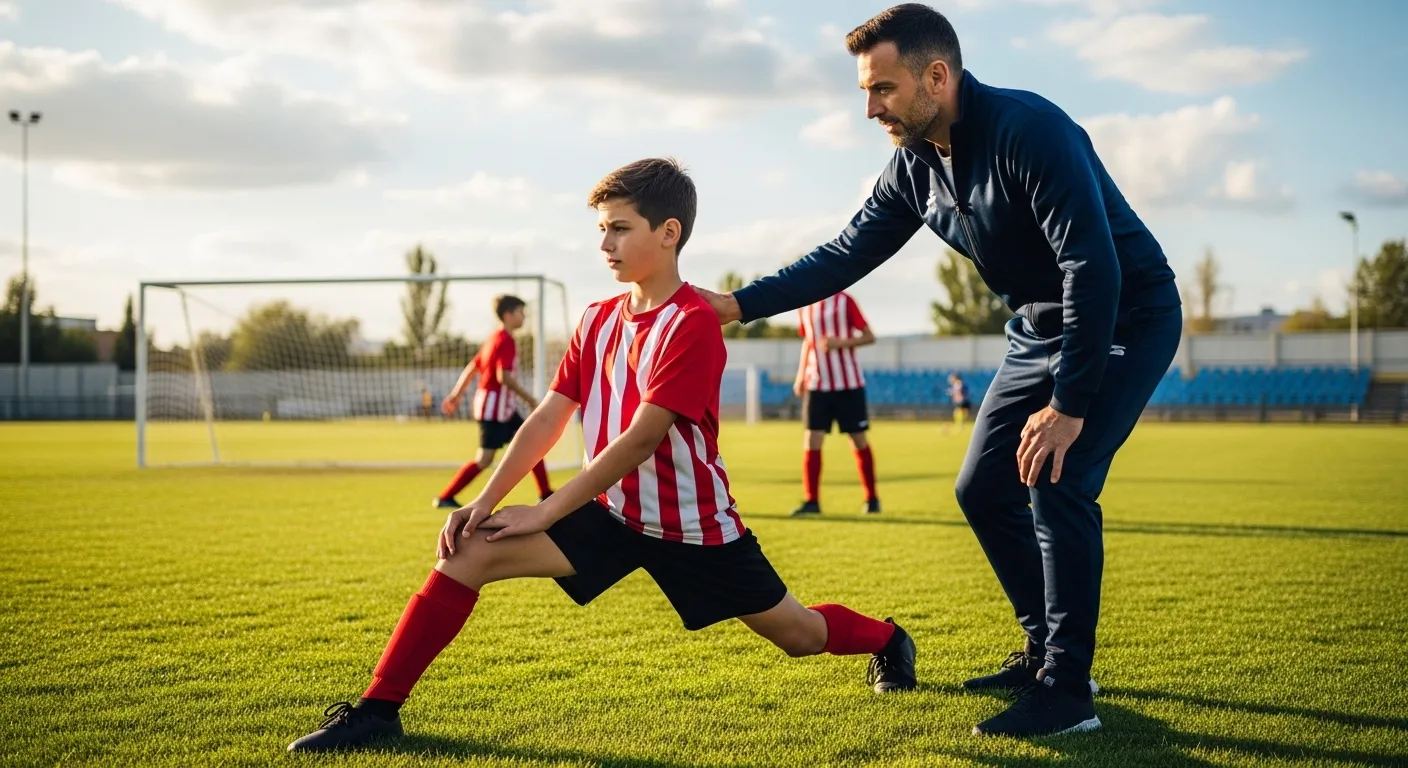

In 2026, strength training is not just a performance topic anymore. It is one of the most important injury-prevention conversations in sports and active living. That shift matters because many athletes, weekend warriors, runners, and recreational players still think about strength work as something optional, something only for bodybuilders, or something to add later when they have more time. In reality, the latest guidance points in the opposite direction. Strength training is now being treated as a core part of staying durable, moving well, and lowering injury risk over time.
That is especially relevant for a site like Sports-Injuries.com, where readers are already searching for practical ways to prevent setbacks, recover smarter, and return to activity with more confidence. A stronger body does not make you invincible, but it does make you harder to break down. Better muscle strength, improved movement control, stronger tendons, and better tolerance to load can all help reduce the “too much, too soon” pattern that drives many common injuries.
The big mistake is thinking strength training has to be complicated. It does not. You do not need a perfect athlete-style program to benefit. What matters most is consistency, smart progression, and choosing exercises that support the demands of your sport or activity.
Why strength training is such a major injury topic right now

Sports medicine has been moving in this direction for years, but 2026 gave the conversation more momentum. The American College of Sports Medicine released updated resistance training guidance based on a very large body of evidence, and one of the biggest takeaways is simple: effective strength work does not need to be overly complex to produce real results. That matters for injury prevention because many people never start when they think the bar is too high.
For athletes and active adults, injuries often happen when force exceeds what the body can currently tolerate. That can show up as tendon pain, muscle strains, joint irritation, shin pain, recurring back discomfort, or a larger event like a ligament injury. Strength training helps improve the body’s ability to handle force more effectively.
It raises your tolerance to load
Most sports injuries are not purely bad luck. Many happen when workload climbs faster than tissue capacity. If the body is underprepared for sprinting, cutting, jumping, landing, decelerating, or repeated impact, the risk rises. Strength training helps build that missing buffer.
It improves control, not just muscle size
People hear “strength training” and often picture bigger muscles. But from an injury-prevention perspective, control matters just as much. Strength work can improve balance, coordination, joint stability, and force absorption. Those qualities matter when an athlete has to stop suddenly, change direction, or land from a jump.
That is why strong athletes often move more efficiently
Efficiency is not only about speed. It is also about cleaner mechanics under fatigue. A stronger athlete often holds posture better, controls knee position better, and maintains technique longer. That does not eliminate injury risk, but it can reduce unnecessary breakdown in movement quality.
How strength training helps prevent common sports injuries
The value of strength training becomes clearer when you connect it to real-world injury patterns. Many of the most frustrating sports injuries share the same background problem: the body is being asked to do more than it can currently support.
It helps with tendon overload
Tendon-related problems like patellar tendon pain, Achilles irritation, and some forms of elbow or shoulder overuse often build gradually. Strength training can help because tendons respond to progressive loading. Done properly, that loading improves tolerance and resilience over time.
It helps reduce muscle strain risk
Hamstring strains, calf strains, groin issues, and adductor tightness often happen when athletes are explosive but not adequately prepared for the demands of their sport. Strength work helps by improving force production, control, and tissue readiness.
It supports joint stability
Knees, ankles, hips, and shoulders rely on both passive structures and active muscular support. Better strength around these joints can improve stability and reduce the stress placed on vulnerable tissues during sport.
It also helps after previous injury
One of the biggest predictors of future injury is past injury. That is why strength training matters so much during and after recovery. If someone returns to sport with lingering weakness, poor control, or side-to-side imbalance, the original problem often comes back. That is also why this topic pairs naturally with recovery-focused content instead of competing with it.
What the new 2026 guidance means in practical terms
The latest evidence is useful because it strips away a lot of unnecessary confusion. Many active adults assume injury-prevention strength work must involve advanced programming, heavy barbells, or a full gym setup. The reality is more practical.
Consistency matters more than perfection
The best program is the one you will actually follow. For many people, two to three sessions per week is realistic and effective. A simple plan done consistently beats an ambitious plan that falls apart after ten days.
You do not need fancy equipment
Bodyweight work, resistance bands, dumbbells, kettlebells, cable systems, machines, and barbells can all be useful. The right choice depends on experience, access, injury history, and the demands of the sport. Simpler tools can still build meaningful strength.
Progression still matters
Keeping things simple does not mean staying random. To get stronger, the body needs progressive challenge. That could mean more resistance, more control, more range of motion, better tempo, or improved single-leg stability. Injury prevention is not just about moving. It is about adapting.
More is not always better
This is where some people get hurt. They hear that strength training is helpful, then pile on too much volume too fast. The same principle that applies to running mileage or court time applies here too. Good loading builds resilience. Excess loading without recovery creates new problems.
Best strength-training priorities for injury prevention
If your main goal is reducing injury risk, you do not need to chase every exercise trend online. Focus on movement patterns that support sports demands and everyday durability.
Single-leg strength
Many sports happen one leg at a time. Running, cutting, landing, climbing, and quick directional changes all rely heavily on single-leg control. Split squats, step-ups, single-leg RDLs, and supported single-leg squats can be useful here.
Posterior-chain strength

Glutes, hamstrings, and calves matter for sprinting, deceleration, knee support, and lower-body force absorption. Weakness here often shows up as recurring lower-body issues, especially in runners and field-sport athletes.
Core and trunk control
This is not just about abs. Trunk control helps transfer force, maintain posture, and support cleaner movement during fatigue. Anti-rotation drills, carries, planks, and controlled rotational work can all play a role.
Landing and deceleration mechanics
Strength alone is not enough if movement mechanics are poor. Athletes also need to learn how to absorb force. That is why controlled landing drills, balance work, and neuromuscular warm-ups still matter. Strength training supports these skills rather than replacing them.
Common mistakes that quietly increase injury risk
Many athletes do some strength work but still miss the bigger picture. These are the mistakes that often undermine the benefits.
Only training muscles you can see
If a program overemphasizes chest, arms, and mirror muscles while neglecting hips, hamstrings, calves, adductors, and trunk control, it may look productive without doing much for injury prevention.
Ignoring recovery between sessions
Strength training helps when the body has time to adapt. If hard lifting gets stacked on top of intense practices, long runs, court sessions, or poor sleep with no real recovery plan, risk can go up instead of down.
Using pain as a green light
Some people assume that if they can push through a movement, it must be safe. That logic causes trouble. Not all harmful patterns create immediate pain. Sometimes compensation hides the problem until the tissue becomes irritated enough to force a stop.
Copying elite programs without the same support
Professional athletes train inside a full system that may include coaching, treatment, recovery support, and monitoring. Recreational athletes often copy the workload without the support structure. That is how preventable setbacks happen.
How to fit this into your current Sports-Injuries.com content
This topic works especially well because it strengthens your current content cluster instead of repeating it. For example, readers interested in lower-body protection can naturally move from this article into ACL Injury Prevention for Female Athletes: The 10-Minute Warm-Up That Cuts Risk in 2026. Readers worried about overdoing data can connect this article with How Wearable Tech Can Prevent — or Trigger — Sports Injuries.
It also links cleanly to recovery content. Someone coming back from injury can move to Sports Injury Recovery: Expert Tips for a Faster Healing Process and The Best Exercises for Safe Recovery After a Sports Injury. And if symptoms are not settling, they should be pointed toward When to See a Doctor for Sports Injuries: Key Warning Signs.
Bottom line
Strength training in 2026 is not just about lifting heavier or looking more athletic. It is about building a body that can tolerate sport, movement, and life with fewer setbacks. The new evidence makes one thing clear: injury prevention does not require the most advanced plan. It requires a plan you can stick to, progress gradually, and match to your actual activity demands.
If you want fewer overuse problems, better movement quality, and a stronger return after previous injuries, strength training deserves a permanent place in your routine. Not as a side task. Not as an afterthought. As one of the main tools that helps keep you active.
For broader evidence-based guidance, readers can also review the latest ACSM resistance training update and ACSM’s 2026 strength-training infographic.