Women’s rugby head impacts are becoming one of the most important sports injury conversations of 2026. Rugby is growing quickly among female athletes, and that growth is exciting for the sport. More players, more teams, more competition, and more visibility are good signs. But with that growth comes a serious responsibility: female athletes need brain-health guidelines based on their own data, not only research built around male athletes.
For years, contact-sport safety conversations have focused heavily on men’s rugby, men’s football, and other male-dominated collision sports. Female athletes have often been included later, studied less, or treated as if the same assumptions automatically apply. That approach is no longer good enough. The female game has different body sizes, match demands, training histories, injury patterns, and biological factors that may affect concussion risk, symptom reporting, and recovery.
This does not mean women should avoid rugby. It means the sport needs smarter prevention, better recognition, and more careful return-to-play decisions. A strong brain-health culture helps athletes stay in the game longer and safer. It also helps coaches, parents, trainers, and medical teams make decisions based on health instead of pressure.
Why Women’s Rugby Head Impacts Are Getting More Attention
The attention around women’s rugby head impacts is rising because repeated head contact is not only about diagnosed concussions. Athletes may experience many smaller impacts in tackles, rucks, scrums, falls, accidental collisions, and training drills. Not every impact causes obvious symptoms, but researchers are asking better questions about how repeated exposure may affect brain health over time.
This is especially important because women’s rugby is expanding at school, university, club, and elite levels. As participation grows, injury-prevention systems need to keep up. More athletes means more opportunity, but it also means more responsibility to build safer coaching methods, better medical screening, and clearer education for players.
The old idea that athletes should simply “tough it out” after a head impact is dangerous. Rugby already demands toughness. Brain health demands honesty. An athlete who reports symptoms is not letting the team down. She is protecting her future and giving the medical team the information needed to make a safer decision.
The Female Athlete Research Gap
One of the biggest issues is the lack of female-specific concussion research. Many return-to-play protocols and sport-safety assumptions have been shaped by data from male athletes. That creates a problem because female athletes may not experience, report, or recover from concussion in exactly the same way as male athletes.
Female players may also face different cultural pressures. Some athletes feel they must prove they belong in a contact sport. Others may worry that reporting symptoms will be seen as weakness or will cost them playing time. These pressures can lead athletes to hide headaches, dizziness, brain fog, nausea, light sensitivity, or emotional changes after a hit.
Better research can help answer practical questions. How many impacts are players experiencing in training and matches? Which positions face the most exposure? Which drills create unnecessary risk? Do menstrual cycle factors, neck strength, previous injuries, or fatigue affect symptoms and recovery? These questions need evidence, not guesses.
Guidelines Should Match the Athlete, Not Just the Sport
Rugby safety rules should protect everyone, but the details matter. Female athletes deserve guidelines that reflect their sport environment and their bodies. That includes research on impact exposure, symptom patterns, recovery timelines, equipment, coaching technique, and return-to-play decisions. A copy-and-paste approach from men’s sport leaves too many gaps.
Why Repeated Head Impacts Are Different From One Big Concussion
A concussion is usually recognized when symptoms appear after a blow to the head or body. Those symptoms may include headache, dizziness, confusion, blurred vision, balance problems, nausea, memory issues, sensitivity to light or noise, sleep changes, or feeling “not right.” But repeated head impacts can happen without every single contact producing clear symptoms.
This is why sports medicine is paying more attention to exposure, not only diagnosis. A player may not have a diagnosed concussion every week, but she may still experience regular head acceleration during contact. Researchers want to understand what those patterns mean, especially across a full season or several years of play.
For coaches and teams, the practical message is clear. Do not wait for a major concussion before taking head-contact reduction seriously. Safer tackling technique, controlled contact volume, better fatigue management, and immediate symptom reporting all matter before a serious injury occurs.
Head Contact in Training Counts Too
Many athletes and coaches focus on match-day collisions, but training exposure also matters. Repeated contact drills, poorly controlled tackling sessions, and fatigue-heavy practices can add risk. Teams should review how often contact is used in training, whether technique is being coached properly, and whether players are getting enough recovery between high-contact sessions.
What Coaches, Parents, and Athletes Should Watch For
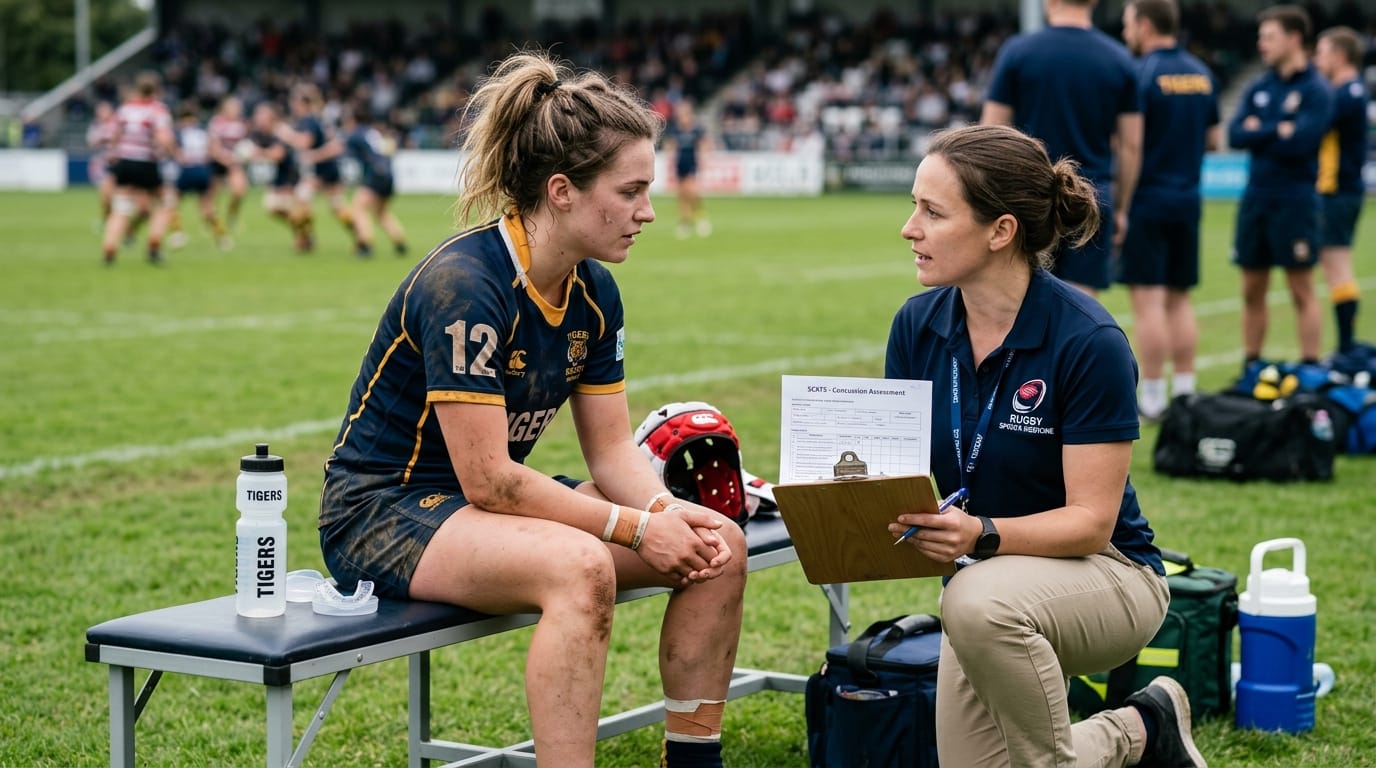
Head-impact safety depends on recognition. Symptoms may appear immediately or later that day. A player may look fine at first, then develop headache, fatigue, fogginess, sleep problems, mood changes, or trouble concentrating. That delay is one reason athletes should be monitored after a suspected head impact, not only during the game.
Coaches should watch for slow reactions, balance problems, confusion, unusual behavior, poor coordination, blank staring, or a player seeming “off.” Parents may notice symptoms after the match, such as irritability, difficulty doing schoolwork, sensitivity to light, or unusual tiredness. Athletes should be encouraged to report symptoms honestly, even if they feel embarrassed.
The safest rule remains simple: when in doubt, sit them out. A player should not return to the same match because she wants to help the team. A championship, tournament, or rivalry game is not worth a long-term brain-health risk. For a deeper guide, read Concussion Return to Play in 2026.
Delayed Symptoms Still Matter
A delayed headache, foggy feeling, sleep change, or mood shift after contact should not be ignored. Symptoms do not need to appear instantly to matter. Athletes should report changes, and adults should take those reports seriously. If symptoms worsen, repeat, or interfere with school, work, training, or daily life, medical evaluation is needed.
How Women’s Rugby Can Build Safer Brain-Health Habits
Reducing women’s rugby head impacts does not mean removing the competitive spirit of rugby. It means improving the way players prepare, train, report symptoms, and return after injury. Brain-health protection should become part of team culture, not a separate lecture once a season.
Start with education. Players should understand symptoms, reporting expectations, and why hiding symptoms can be dangerous. Coaches should explain that reporting is a strength, not a weakness. Parents and teammates should avoid comments that pressure athletes to return too soon. A player who sits out after a suspected concussion is making a responsible decision.
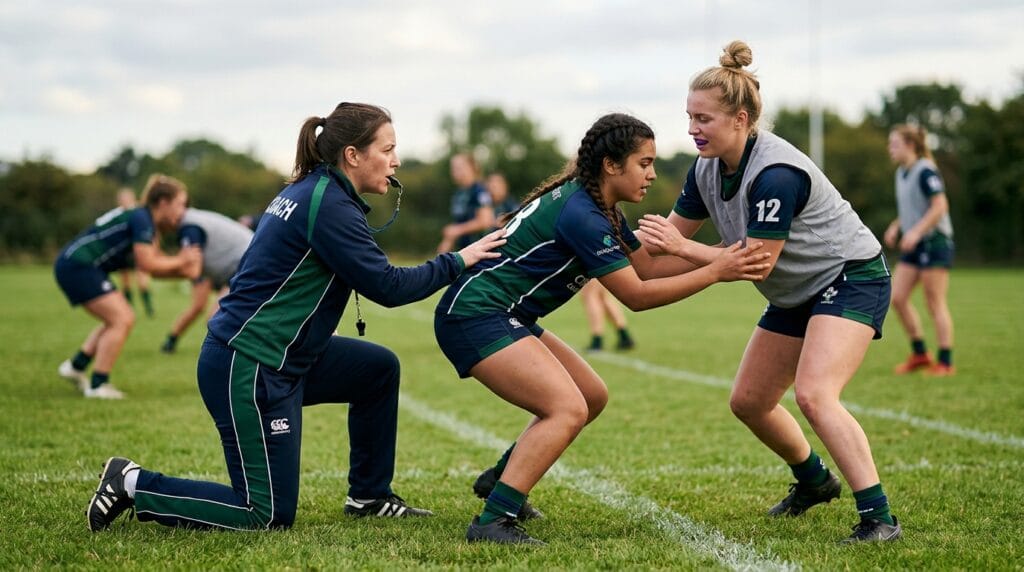
Next, improve technique. Safer tackling and contact preparation should be taught repeatedly, not assumed. Players need to learn body position, head placement, timing, footwork, and how to avoid dangerous contact situations. Coaches should also reduce unnecessary head contact in drills and avoid using high-impact practice as a shortcut for toughness.
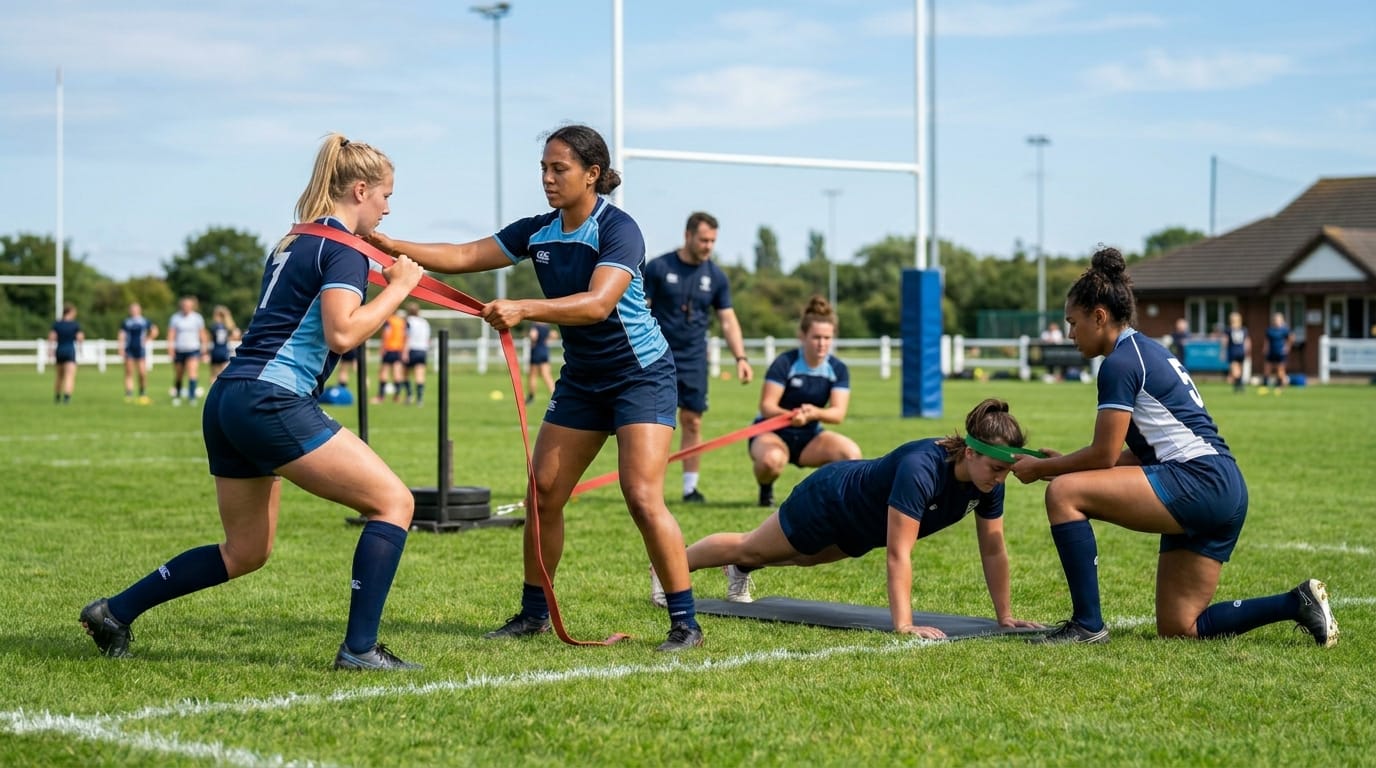
Strength and conditioning can also help. Neck strength, trunk control, hip strength, deceleration, and overall movement quality may support safer contact mechanics. This does not make athletes concussion-proof, but it can improve preparedness. Your article on Strength Training for Injury Prevention in 2026 connects naturally with this prevention approach.
Wearable technology may also become more important in rugby brain-health research. Instrumented mouthguards and other monitoring tools can help researchers understand impact frequency and severity. However, technology should support medical decisions, not replace them. Data is useful only when teams know how to interpret it responsibly. For more on smart tracking, read Wearable Tech for Sports Injury Prevention in 2026.
Return to Play Should Be Gradual and Supervised
After a concussion, return to sport should follow a structured progression under proper medical guidance. The CDC explains that athletes should return to sports practices only with healthcare-provider approval and supervision. Each step should be handled carefully, and symptoms should be watched after activity. If symptoms return, the athlete should stop and be reassessed. Use the CDC HEADS UP return-to-sports guidance as an authority resource.
Female athlete safety should also be part of a wider injury-prevention conversation. Women’s sports are finally receiving more attention for injury patterns that were under-studied for too long. The same urgency seen in ACL research should apply to brain health. If your readers want another female-athlete safety topic, link them to ACL Injuries in Women’s Soccer in 2026.
The future of women’s rugby should not depend on athletes accepting preventable risk. It should depend on better evidence, better coaching, better medical support, and better respect for symptom reporting. The sport can stay physical, intense, and competitive while still taking brain health seriously.
For players, the message is direct: report symptoms, respect recovery, and do not let pressure decide your health. For coaches, the responsibility is clear: teach safer contact, manage training load, and create a team culture where athletes are protected. For parents and medical teams, the goal is steady support, not rushed returns.
Women’s rugby head impacts deserve better guidelines because female athletes deserve better answers. More research, smarter prevention, and stronger return-to-play standards can help the sport grow without ignoring the risks. Rugby is built on courage, but real courage includes protecting the brain, listening to symptoms, and making safety part of the game’s future.